
Alcúdia Old Town's medieval walls, gates and lanes
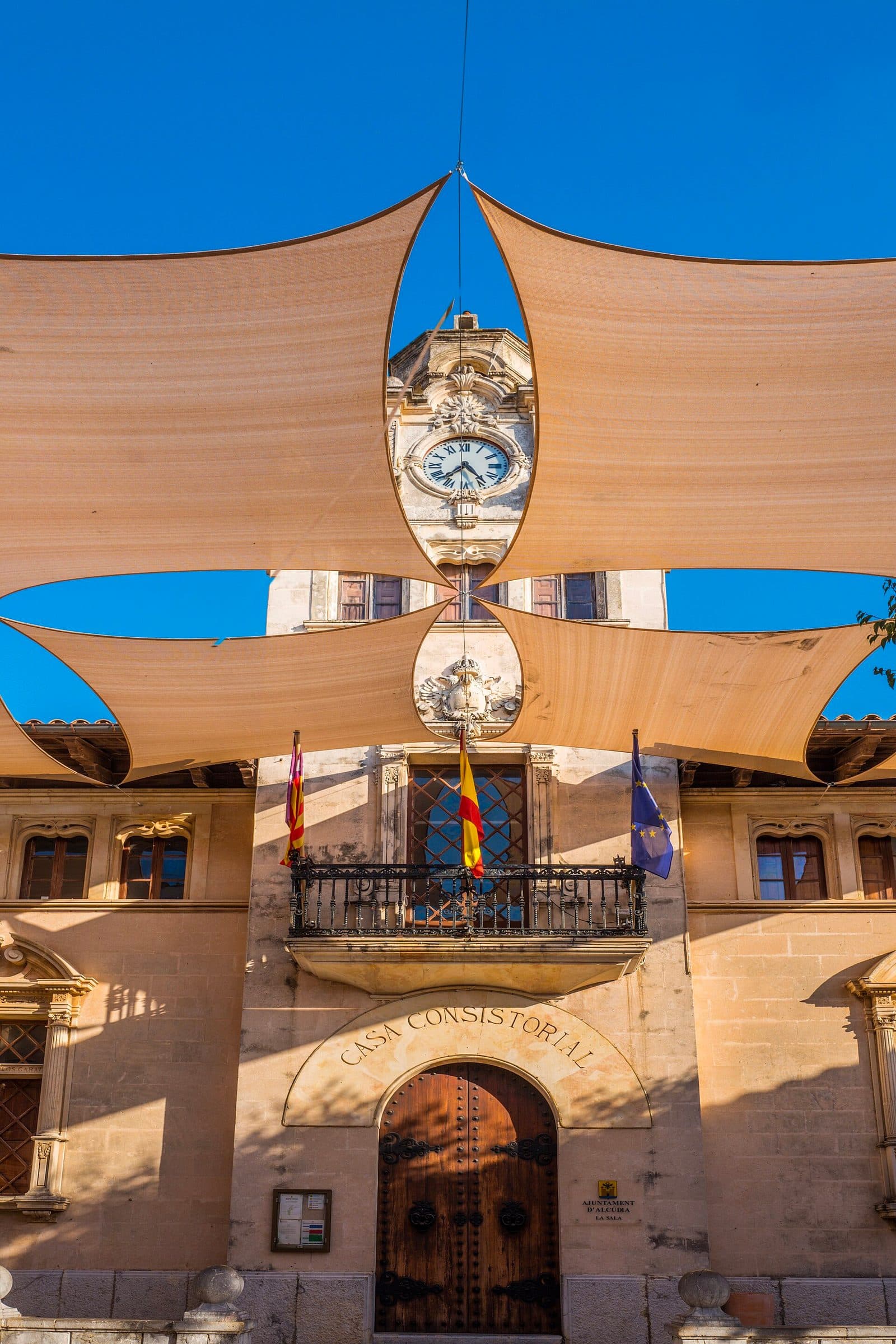
Beyond a stone city gate, Alcúdia changes character. Traffic is left behind, the streets narrow, natural-stone façades draw closer together, and the crenellated outline of the fortifications repeatedly appears above the rooftops. Alcúdia Altstadt is not a single monument but a historic urban area that remains clearly separated from its surroundings by a completely preserved medieval wall.
Its appeal lies in the changing perspectives. At times, the route leads through cobbled lanes and past Mallorcan houses; at others, it climbs onto an accessible section of the wall. Between them are squares with cafés, small shops and quiet side streets. The old town is not merely visited but continues to be used and inhabited. This is precisely why it feels less like a sealed-off historic backdrop and more like a place whose past remains part of the everyday townscape.
A visit is worthwhile for history enthusiasts as well as travellers who want to stroll through a compact old town without a fixed itinerary. Families will find short distances and plenty of visible details, while photographers can move between arches, battlements, façades and elevated viewpoints. Visitors arriving from Port d’Alcúdia or the beaches of the bay will also experience a distinctly different side of northern Mallorca here. The city wall provides the common thread, but the real discovery begins between its gates. Sant Jaume, the central squares, narrow lanes and proximity to the Roman city of Pollentia reveal how many layers of history meet in this place.
History and significance
Long before the medieval wall was built, the area around Alcúdia was an important settlement zone. After the Roman conquest of Mallorca in 123 BC, Pollentia was founded south of today’s old town. The Roman city developed into an important centre on the island but declined in significance after being sacked by the Vandals in 426. Its ruins lie outside the medieval wall and should therefore be understood as a separate historic site – while also explaining why Alcúdia’s surroundings have a history that extends far beyond the Middle Ages.
Alqudya
The present name dates back to Mallorca’s Islamic period. According to the local tourism website, Alcúdia developed from the farmstead of Alqudya; the name refers to a hill. The area around the street de n’Amorós, at the highest point of the historic centre, is considered a possible location. The topography can still be sensed while walking: even gentle slopes alter the views through the lanes and show that the old-town centre did not arise in this location by chance.
After the Catalan conquest, the area was redistributed in the Repartiment of 1232. Alcúdia passed to the Crown and was therefore royal land. Documents show that by 1279 at the latest, the town already had a certain significance as both a geographical centre and a settlement. The fortified town was thus not a decorative foundation but part of Mallorca’s political and spatial reorganisation.
The medieval fortifications
Construction of the city wall began in 1298 under King Jaume II. It was intended to protect the population and this strategically located settlement. Anyone standing before one of the gates today is therefore looking not merely at a picturesque entrance but at the transition between unprotected countryside and a deliberately fortified urban area. Towers, battlements and stretches of wall gave the settlement a clear boundary while determining where people, goods and travellers could enter the town.
The fortifications remained important beyond the Middle Ages. After repeated threats from pirate attacks, another wall was added in the 17th century. The defences were thus adapted to new dangers and military requirements. Not every part of these later fortifications shapes the townscape as clearly as the medieval wall, but their history explains the bastions and former defensive areas that can be seen around the old town.
From refuge to historic centre
When Alcúdia lost economic importance at the end of the 18th century, its role changed. The walls remained standing, however, preserving the unusually distinct form of the old centre. Today, the completely preserved fortifications surround a lively district with homes, shops, restaurants and religious buildings. The historic centre is therefore both a monument and an everyday living environment.
This continuity is what makes it significant. The wall demonstrates medieval urban planning on a large scale, while the lanes and squares reveal how life continued to evolve within that boundary. Nearby, Pollentia recalls the Roman past, while the name Alcúdia preserves the Islamic period. Few walks in northern Mallorca demonstrate so vividly that the island’s history does not belong to a single era.
What to see
The wall makes the first impression. It encircles the historic centre as a complete, widely visible boundary and still gives Alcúdia the silhouette of a fortified town. From within, it appears unexpectedly between houses and at the ends of lanes; from outside, it becomes clear how closely the buildings, church and defences are connected.
The city wall
Parts of the medieval wall are accessible on foot. From there, the view rises above street level and the layout of the old town becomes easier to understand: rooftops crowd together inside the ring, while the newer parts of Alcúdia and the surrounding countryside begin beyond the fortifications. The wall walk is therefore not only a viewpoint but also demonstrates from above how consistently the historic town was separated from its surroundings.
Seen up close, rough stone surfaces alternate with battlements, towers and passageways. Particularly interesting are the places where homes or larger buildings stand directly beside the fortifications. Here it becomes clear that a city wall never functioned in isolation. It served simultaneously as a boundary, a means of controlling movement and a defensive structure. While walking around, it is therefore worth looking not only for the broadest view but also at the connections, wall thicknesses and positions of the gates.
Porta del Moll
Porta del Moll is one of the most distinctive historic entrances. Its arch frames the view into the old town and makes the transition into the walled centre especially vivid. The space opens out in front of the gate, while beyond it the perspective quickly narrows into streets and façades. This contrast still conveys how carefully access to a fortified town was once controlled.
The gate is also a good starting point for first walking along part of the wall’s exterior before entering the network of lanes. From a distance, its defensive form is easier to appreciate; inside the walls, houses, squares and urban life dominate instead. Both perspectives are essential to understanding the old town.
Porta de Sant Sebastià
Porta de Sant Sebastià also shapes the appearance of the fortifications. It passes through the wall and connects the historic town with the roads and parking areas outside. Entering here makes the transition immediate: the open space in front of the wall gives way to narrow streets, natural stone and short sightlines.
The gates are more than photographic subjects. The extent of the historic centre can be traced between them without reducing the walk to a simple circuit along the same street. A practical route enters through one gate, continues through the inner lanes and later exits at another section. This alternates between interior and exterior views of the fortifications.
Església de Sant Jaume
The church of Sant Jaume stands at the edge of the historic centre and is closely connected to the city wall. Its Gothic character and defensive appearance suit the walled town. Rather than standing freely on a large site, it appears as part of the built fabric formed by the fortifications and old town.
From outside, its powerful stone architecture and position beside the wall are particularly striking. The church is on a different scale from the neighbouring houses and helps visitors find their bearings within the network of lanes. Whether an interior visit is possible should be checked before arrival, as access and church use may vary.
Plaça de la Constitució
Streets lead in several directions from the square. Those who avoid the most direct route will quickly reach quieter sections. This contrast is one of Alcúdia’s strengths: only a few steps separate lively squares from narrow lanes where front doors, stone surrounds and planted entrances attract attention.
Lanes and Mallorcan houses
The historic centre is best explored slowly. Cobbled streets run between natural-stone façades; large house entrances and small courtyards offer glimpses of traditional residential architecture. Boutiques, craft shops and restaurants continue to use many of the old buildings. This keeps the streets lively without diminishing their intimate scale.
Not every interesting corner has a famous name. An arch at the end of a street, a façade decorated with colourful flowers or a sudden view of the wall can be just as memorable as the major buildings. Those who follow only the main routes between the gates, church and square will see the principal sights. Visitors who also turn into the side streets, however, will better understand why the old town as a whole is the true attraction.
Visiting Alcúdia Altstadt
A walk ideally begins not with a rigid list but with the city wall as a guide. It is worth viewing the exterior first, because only from there does the completeness of the fortifications become apparent. The route can then pass through one of the historic gates into the centre, continue to Plaça de la Constitució, through side streets and to Sant Jaume. An accessible section of the wall provides a rewarding change of perspective at the end.
Walking through walls and lanes
For a first impression, one continuous walk through the main streets is sufficient. Those who examine façades, linger on the wall or stop at a café can easily extend their visit. There is therefore no single ideal duration: the old town works equally well as a focused cultural stop or as a destination for a relaxed part of the day.
Finding your way is easier than the winding street pattern initially suggests. The wall encloses the historic centre, while Sant Jaume, the central squares and the gates serve as recurring landmarks. Visitors who wander freely will never remain far from a prominent building or the fortifications for long.
Sunday market day
On Sundays, the large weekly market changes the atmosphere. Central areas become livelier, market stalls attract additional visitors, and a walk can be combined with shopping for local goods. Those who want to experience the market and old town together should deliberately choose this day. For the quietest possible architecture walk, another weekday is generally a better choice.
During the market, attention should not focus solely on the stalls. The gates, façades and squares feel busier, while also demonstrating that Alcúdia’s centre remains a regional meeting place. After visiting the market, it is worth exploring the less direct side streets, where crowds often disperse more quickly than along the main routes.
Time of day and crowds
In summer, Alcúdia is one of the most popular destinations in the north of the island. The central squares, well-known gates and market can therefore become especially busy. Later light emphasises the warm colours of the stone and is well suited to exterior photographs of the wall and gates. Whatever the time of day, it is worth briefly leaving the main lanes, because the next side street may already present a much quieter scene.
Specific opening hours and admission arrangements may differ depending on the accessible section of wall, church or other facility. Current information should be checked before any planned interior visit. A walk through the historic urban area can be planned independently, while individual buildings may require separate access.
Getting there and parking
From Palma, the main route runs almost continuously north. From Palma Zentrum, the road distance to Alcúdia is 55 km; the journey takes around 49 minutes and follows the Ma-13. From Palma airport, the distance to Alcúdia is 58 km. The journey takes around 45 minutes and initially follows the Ma-30, then the Ma-13.
These distances and driving times apply to Alcúdia, not to a parking space directly beside a particular city gate. The final section leads to the edge of the historic centre. The wall is a useful landmark even while approaching, while the streets around the old town direct traffic around the historic centre.
Parking outside the wall
The historic old town itself is not a suitable destination for normal through traffic. Parking is available outside the fortifications, including along and near Avinguda Príncep d’Espanya. From there, the route continues on foot across the area in front of the wall and through one of the city gates. This short transition enhances the first impression: the fortifications initially appear as a complete structure before the lanes open beyond them.
Demand for parking increases in summer and on Sunday market days. At these times, it makes sense not to insist on finding a space directly beside a preferred gate but to use an available place along the outer ring. The compact layout of the old town makes several entrances practical.
By bus
Several bus stops are located near the historic centre. Centre històric and Pol·lèntia are particularly useful points of reference for getting off; other stops are located in the adjacent urban area. From the bus, the final stretch continues on foot towards the wall and through a city gate. As routes and timetables may change, current connections should be checked before travelling.
Public transport offers a practical advantage on market days and during the busy summer travel season: there is no need to search for parking. The visit itself remains a walking tour, as the walls, squares and lanes lie within a manageable historic centre.
Bus lines to Alcúdia Altstadt at a glance
| Line | Route | Departures/day | First (Mon–Fri) | Last (Mon–Fri) |
|---|---|---|---|---|
| 322 | Pollença - Port d'Alcúdia | 278 | 07:00 | 23:55 |
| 324 | Can Picafort - Alcúdia | 229 | 00:01 | 23:49 |
| 302 | Can Picafort - Palma | 140 | 00:01 | 23:42 |
| 315 | Sa Pobla - Badia d'Alcúdia | 123 | 06:53 | 23:29 |
| 327 | Alcúdia - Estany Petit | 94 | 07:47 | 23:42 |
| A32 | Can Picafort - Aeroport | 62 | 00:06 | 23:17 |
| 325 | Alcúdia - Cala Rajada | 39 | 08:27 | 22:38 |
| A33 | Port d'Alcúdia - Aeroport | 35 | 00:35 | 23:35 |
From the official GTFS feeds (TIB/SFM), no real-time data. The figures cover all stops in the town; weekend and holiday services differ — check with the operator before travelling.
Getting there by bus
Entre-mar-i-estany 2 (3065) · 1.5 km as the crow flies
- 302Can Picafort - Palma · Daily
- 315Sa Pobla - Badia d'Alcúdia · Daily
- 322Pollença - Port d'Alcúdia · Daily
- 324Can Picafort - Alcúdia · Daily
- 325Alcúdia - Cala Rajada · Daily
- 327Alcúdia - Estany Petit · Daily
- A32Can Picafort - Aeroport · Daily
- A33Port d'Alcúdia - Aeroport · Daily
Entre-mar-i-estany 1 (3064) · 1.5 km as the crow flies
- 302Can Picafort - Palma · Daily
- 315Sa Pobla - Badia d'Alcúdia · Daily
- 322Pollença - Port d'Alcúdia · Daily
- 324Can Picafort - Alcúdia · Daily
- 325Alcúdia - Cala Rajada · Daily
- 327Alcúdia - Estany Petit · Daily
- A32Can Picafort - Aeroport · Daily
- A33Port d'Alcúdia - Aeroport · Daily
Pla del Pinar 2 (3063) · 1.8 km as the crow flies
- 302Can Picafort - Palma · Daily
- 315Sa Pobla - Badia d'Alcúdia · Daily
- 324Can Picafort - Alcúdia · Daily
- 325Alcúdia - Cala Rajada · Daily
- 327Alcúdia - Estany Petit · Daily
- A32Can Picafort - Aeroport · Daily
Av. Tucà (3032) · 1.8 km as the crow flies
- 327Alcúdia - Estany Petit · Daily
Timetable data: official GTFS feeds (TIB/EMT), no real-time — check with the operator before travelling.
Nearby attractions
An even older history begins directly outside the medieval town. South of the old town lie the ruins of Pollentia, the Roman predecessor settlement. The two places should not be confused: Pollentia is a separate archaeological site, while Alcúdia Altstadt primarily refers to the medieval, walled centre. Together, however, they make for a particularly coherent day of history – first the ancient city, followed by the gates, wall and lanes of later Alcúdia.
Alcúdia beyond the wall
Outside the fortifications, the modern town continues with residential streets, roads and public facilities. The contrast with the historic centre is clear. A short walk along the exterior of the wall demonstrates especially well how clearly the old boundary can still be read. Those who remain exclusively within the gates miss this important overall view.
The town is also a useful base for further destinations in northern Mallorca. Its coastal location and proximity to two bays have shaped Alcúdia for centuries, even though the sea is not constantly visible from the narrow old-town lanes. From elevated sections of the wall, the view extends farther than at street level and restores the connection with the surrounding landscape.
Port d’Alcúdia and the bay
Port d’Alcúdia is the coastal harbour and beach resort and should not be confused with the historic old town. There, the harbour promenade, beach and tourist infrastructure define the scene; inside the walls, history, intimate streets and traditional architecture take centre stage. Both areas can be combined in one day without treating them as a single town centre.
A well-balanced itinerary begins in the old town and continues later to the coast. Stone walls and cobbled streets are then followed by a walk beside the harbour or beach. Conversely, Alcúdia’s historic centre provides a cultural conclusion after a morning by the sea.
Northern Mallorca
Alcúdia is conveniently situated for further excursions in the north of the island. Pollença, Port de Pollença and the Formentor peninsula are frequently combined destinations; south of the bay are the long beach areas of Alcúdia and Playa de Muro. Each of these places deserves its own time. For a visit to the old town, it is better not to squeeze too many stops into a short walk but to appreciate the wall, lanes and squares at a deliberate pace.
The place it belongs to
Alcúdia in the place guidePractical visitor information
Cobblestones, stone passageways and an accessible section of wall shape the walk more than smooth museum floors. Comfortable, sturdy shoes are therefore a more sensible choice than delicate or very smooth footwear. Even those planning only a short visit will cover most of the route on foot.
Sun and shade
Depending on the position of the sun, the narrow lanes provide shade, while squares, wall walks and areas outside the fortifications may be more exposed. Sun protection and water are therefore essential for a summer walk. A break can easily be taken in one of the squares or at a café instead of walking the entire wall without stopping.
Visiting with children
The old town is vivid for families because history is not confined to information panels. Visitors pass through gates, towers can be seen from the street, and an elevated section of wall changes the view across the rooftops. The walk can also be shortened at any time or interrupted by a break in a square.
Children should be kept close on accessible sections of the fortifications and at transitions. Cobbled streets and historic entrances may be less convenient for a pushchair than modern pavements. This does not allow a definitive statement about step-free accessibility along the entire route; anyone requiring step-free paths should check current local access conditions in advance.
What the old town is not
Alcúdia’s historic centre is not a sealed open-air museum or a castle with a single visitor route. People live, shop, eat and work within the wall. Some buildings may have their own access rules, while others are primarily viewed from outside. The value of a visit therefore lies in the interplay between the fortifications, streetscape and contemporary urban life.
Likewise, Pollentia should not be sought within the medieval walls. The Roman ruins form a separate archaeological site outside the old-town centre. Visiting both places makes it possible to see, through this spatial separation, how the centre of settlement shifted over the course of history.
Finding your way
A historic map of the town is available from the local tourist information offices; an audio guide is also offered through the Experience-Alcúdia app. Both help place less conspicuous details in context without reducing the walk to the well-known gates. For an independent visit, however, a simple basic plan is enough: view part of the wall from outside, enter through a gate, head towards the central square and Sant Jaume, and return via side streets to another section of the wall.
Local insider tips
Walk through two gates
Do not begin and end the walk at the same gate: the route from Porta del Moll through the inner lanes to Porta de Sant Sebastià connects two distinctive entrances and reveals different sides of the wall.
Outside first, then inside
Before entering, walk along part of the wall’s exterior. Only there can its complete effect as an urban boundary be fully appreciated; within the old town, it repeatedly disappears behind houses and lanes.
Late-afternoon light
Later in the afternoon, the warmer light highlights the textures and colours of the stone walls. The arches and exterior of the fortifications are then particularly well suited to photographs with distinct shadows.
Choose Sunday deliberately
The large Sunday market brings plenty of life to the historic centre. Those who want to experience the market and old town together should visit on this day; another weekday is better for quieter views of the façades and gates.
Connect two eras
The Roman ruins of Pollentia lie outside the medieval old town. Visiting both places in sequence makes the transition from the ancient settlement centre to the later fortified town particularly easy to understand.
Weather information without guarantee. For safety-critical decisions, consult official weather services.